US Army plans Iowa detonation this week despite court stay over lead plumes
Published in Science & Technology News
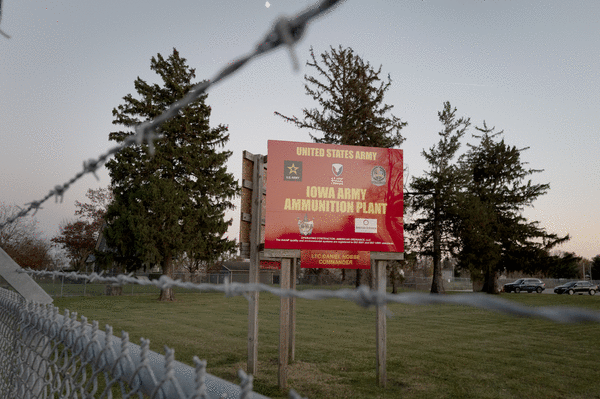
The U.S. Army still plans to detonate an Iowa ammunition plant Monday or Tuesday, according to a Saturday court filing, a plan that was postponed last week by a court stay after public outcry over concerns that the explosion would likely release plumes of toxic lead dust into the air.
The Department of Justice, which filed the notice, said there is an “immediate risk” that the lead will explode on its own as temperatures are expected to drop below 30 degrees this week, allowing the Army to invoke an exception and proceed with the controlled detonation without an emergency permit that environmental groups challenged last week.
“In short, a controlled detonation is by far safer than an uncontrolled explosion,” the DOJ said, noting that it would allow the Army to minimize risk to the public, and that the agency “intends to act consistent with” the terms of the emergency permit even if it is not in effect.
Army officials have claimed they have no other choice than to blow up 68 drums containing 9,500 pounds of highly volatile, extremely hazardous lead azide at an ammunition depot in southeast Iowa.
According to reporting by The New York Times, the Army had hired a company to chemically neutralize the lead azide but canceled the contract two months later, citing safety concerns.
Initially, the Army’s computer modeling showed a plume of brain-damaging lead could have blown more than 100 miles into western Illinois on Friday, depending on weather conditions.
Environmental groups sued the Army on Thursday seeking to stop or delay the detonations, which could go on for at least four hours outside Middletown, Iowa, less than 8 miles west of the Mississippi River border between the state and Illinois.
“There is no safe level of lead in the body, and when inhaled or swallowed, it can pose serious health risks,” said Sameer Vohra, director of the Illinois Department of Public Health, in a news release last week.
A neurotoxin, lead is particularly harmful to children and pregnant women, and can cause developmental delays, difficulty learning and behavioral issues, according to the Centers for Disease Control and Prevention.
Lead azide has long been used as an explosive to trigger bombs and rockets, though it is being phased out by the armed forces because of concerns about its volatility and toxicity.
It remains unclear why the Army allowed stores of lead azide to degrade at its Iowa ammunition plant to the point that moving it off-site posed an “unacceptable risk of accidental detonation,” according to documents published on its website. According to The New York Times, the material stored at the facility had been considered stable for years until an inspection earlier this year revealed the presence of crystals that make it risky to even open the barrels it was stored in.
“Destroying it in place is the only responsible option,” Army officials state in the documents, one of which was only signed on Thursday. Doing so “restores vital military-industrial readiness,” they contend.
The U.S. Environmental Protection Agency granted an emergency permit for the detonations just last week. Documents posted online by the Army show the military branch has been consulting with the EPA for months about the plans, yet the public wasn’t notified until recently. Illinois EPA said it also had not been notified of the detonation by its federal counterpart.
_____
(Chicago Tribune’s Michael Hawthorne contributed.)
____
©2026 Chicago Tribune. Visit chicagotribune.com. Distributed by Tribune Content Agency, LLC.






Comments